What Is the Dark Web? (And Is Your Info Already on It?)
A plain-English breakdown of the dark web, why your data is almost certainly on it, and the five things that actually make it useless to criminals.

In this post
The dark web is a hidden part of the internet that you can only reach with special software like the Tor browser, where sites are deliberately anonymous and hard to trace. Is your information on it? Almost certainly, yes. If you’ve been online for any meaningful amount of time, your personal data has probably been exposed in a breach and put up for sale there, but a few basic steps make that data close to useless to criminals.
If you’ve ever had a credit card skimmed, gotten a password reset email you didn’t ask for, or just seen the headlines about yet another massive data breach, you’ve probably wondered about this. It’s less terrifying than it sounds once you understand what’s actually going on.
Let’s break it down.
So what actually is the dark web?
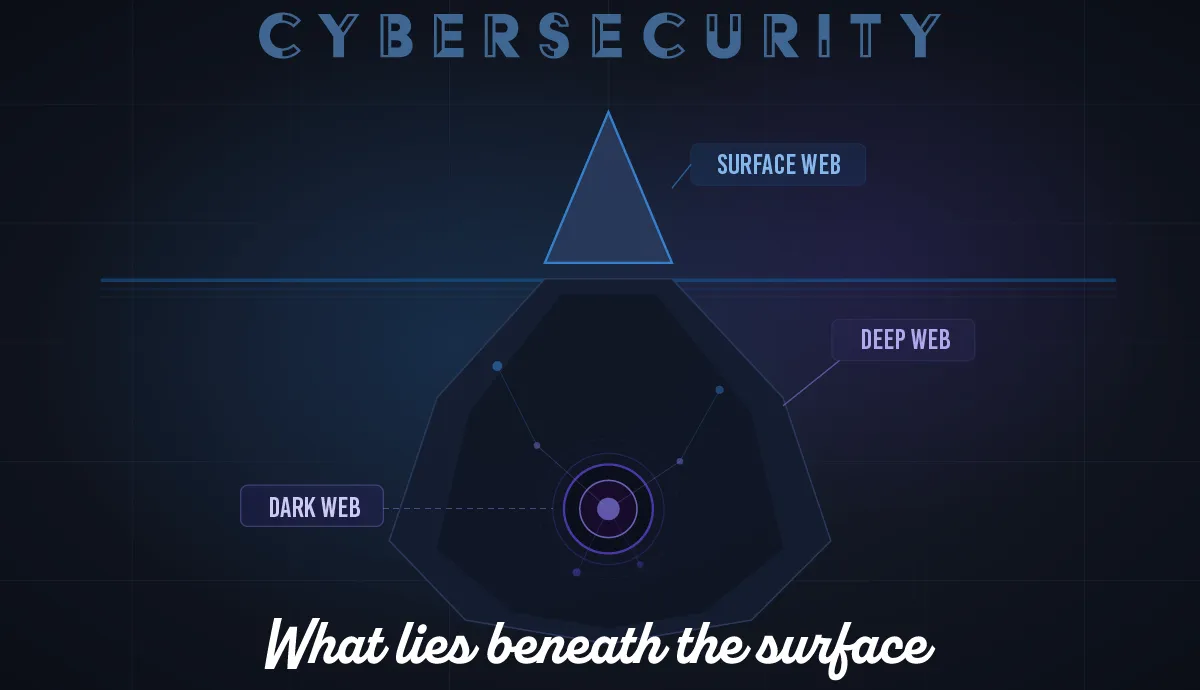
The internet has layers. The part you use every day (Google, Amazon, your bank, social media) is the surface web. It’s indexed by search engines, publicly accessible, and relatively easy to monitor.
Then there’s the deep web, which just means anything search engines don’t index. Your online banking portal, your email inbox, private company databases: that’s all “deep web.” It’s not shady. It’s just not public.
The dark web is a specific slice of the deep web that’s intentionally hidden and requires special software to access. The most common way in is the Tor browser (short for “The Onion Router”). Tor bounces your traffic through a series of encrypted relays around the world, which makes it very difficult to trace who’s who or where anything is actually hosted. Dark web sites use “.onion” addresses instead of “.com” or “.org,” and you can’t stumble onto them in a regular browser.
The dark web wasn’t created for crime. It was developed by the U.S. Navy to allow secure government communications. Today it’s used legitimately by journalists, whistleblowers, activists in repressive countries, and privacy-focused researchers. It’s also home to a very active black market, precisely because it’s so hard to track.
People there typically use Tor, deal in cryptocurrency to avoid a financial paper trail, and communicate over encrypted channels. The markets run a lot like a shady version of eBay, with seller ratings, product listings, even customer service. It’s surprisingly organized, which is part of why it’s so persistent.
The three layers of the internet
| Layer | What’s there | Hidden on purpose? |
|---|---|---|
| Surface web | Google, news sites, social media: anything a search engine can find | No |
| Deep web | Your inbox, bank portal, private databases: not indexed | No |
| Dark web | Requires Tor, .onion addresses, anonymous by design |
Yes |
Your information is on the dark web. Seriously.
Here’s the uncomfortable part: if you’ve been on the internet for a while, your personal information has almost certainly been exposed in a data breach. Possibly several. LinkedIn, Yahoo, Adobe, Equifax, LastPass, T-Mobile: the list of major companies that have been breached is long and keeps growing.
When a breach happens, the data gets packaged up and sold on dark web marketplaces, sometimes within hours. That means email addresses, passwords, phone numbers, Social Security numbers, credit card details, and home addresses.
The prices are shockingly low. A stolen credit card number might go for a couple of dollars. A full identity package with name, SSN, date of birth, address, and account credentials might sell for $20 to $100, depending on the credit score attached to it. There’s so much stolen data in circulation that the market is basically flooded.
You can check whether your email has turned up in known breaches at haveibeenpwned.com. It’s free and run by a well-respected security researcher. Odds are decent you’ll see something there.
What you can actually do about it
You can’t scrub your information from the dark web. Once it’s there, it’s there. What you can do is make it largely useless to anyone trying to exploit it. Here’s what actually moves the needle:
Use a password manager and unique passwords everywhere
If you reuse the same password across sites, one breach exposes all of them. A password manager (1Password is my personal favorite) generates and stores unique, complex passwords so you don’t have to think about it.
Turn on two-factor authentication (2FA) everywhere it’s offered
Even if someone has your password, 2FA means they still can’t get in without your phone or authenticator app. This is probably the single highest-ROI security move you can make. Use an authenticator app over SMS when you can.
Freeze your credit
It’s free, and it prevents anyone from opening new credit accounts in your name, even if they have your full Social Security number. You do it directly with Equifax, Experian, and TransUnion, and you can temporarily lift the freeze when you need to apply for credit. Most people who do this wish they’d done it sooner.
Set up dark web monitoring alerts
Google, Apple, and many identity protection services (including free options through some banks and credit cards) will notify you if your email or information shows up in a known breach. It won’t stop the breach, but it means you can act fast, changing passwords and alerting your bank before things go sideways.
Watch your financial accounts
Turn on transaction alerts for your bank and credit cards. Check your credit report regularly (annualcreditreport.com gives you free access). Catching something early beats discovering fraud months down the road.
The short answer
The dark web is a hidden layer of the internet that requires special software to access, and among other things it’s a marketplace for stolen personal data. If you’ve been online for any amount of time, there’s a very good chance some of your information is already there. That doesn’t have to mean anything bad actually happens to you. Unique passwords, two-factor authentication, and a credit freeze take most of the teeth out of the threat.